
Prune

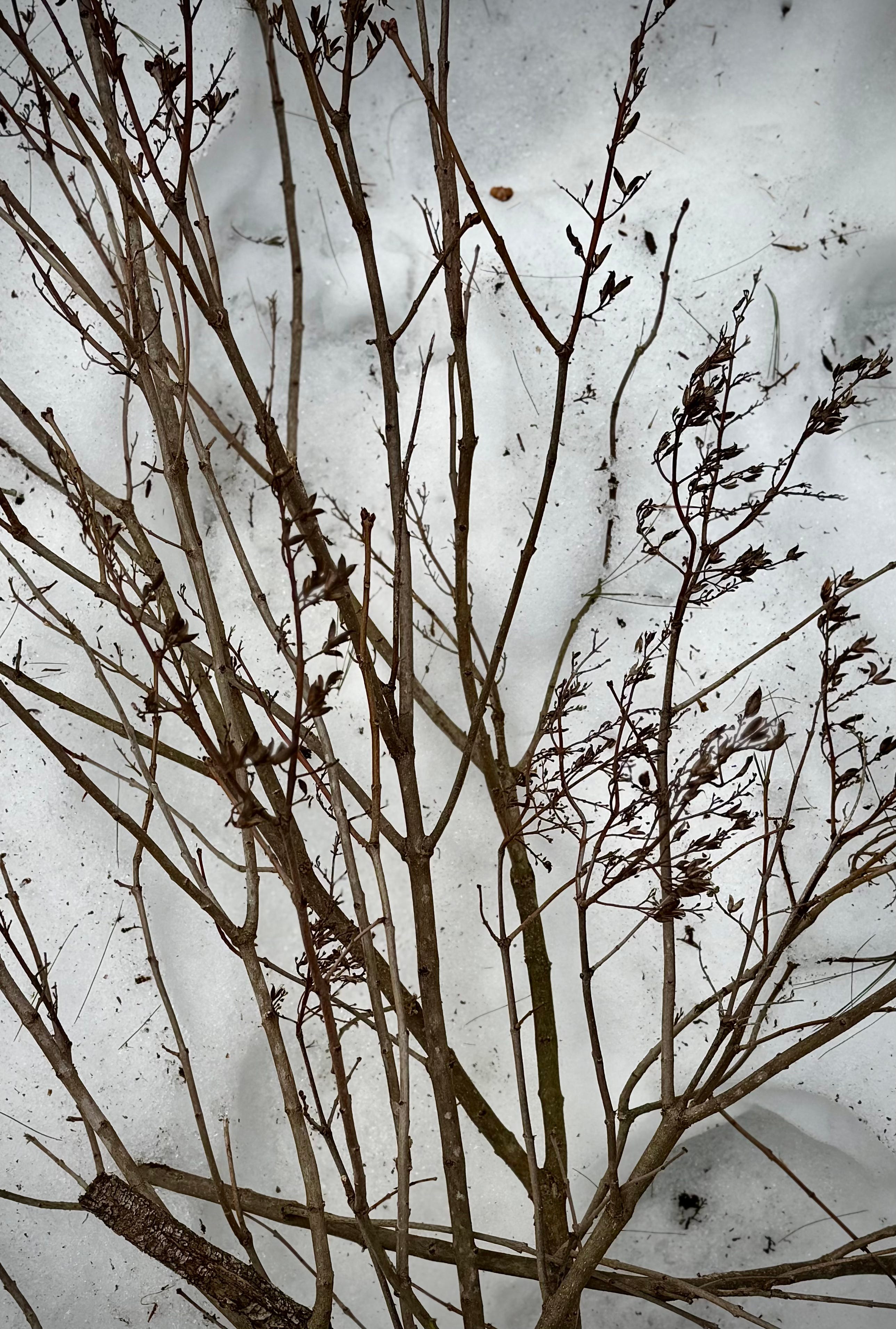
Spring does not begin with growth.
It begins with removal.
Before anything pushes forward, something is cut back. Branches are shortened. Dead wood is taken out. Canes that once carried fruit are cleared so new ones have space to emerge.
The work feels counterintuitive at first. Standing over a lilac bush or a line of raspberry plants, the instinct is restraint. Cutting feels destructive. The plant looks smaller when you’re done. Less full. Less impressive.
But pruning is not loss. It is direction.
This morning the air carried that particular warmth that arrives in early spring — the kind that settles on your skin even when the ground is still holding winter underneath it. Sitting outside, the creek moved steadily behind the house. The sun warmed the split firewood stacked nearby, releasing that dry, sweet smell that only comes when wood heats after months of cold.
The land was quiet, but active.
Lilac branches came off in clean handfuls. Raspberry canes that fruited last year were cut down to the ground. What looked like healthy growth was, in truth, finished work.
Left alone, those branches would continue to draw energy without producing anything new.
The same is true in a working life.
Growth often depends less on what we add and more on what we remove. Old structures. Habits that once worked. Commitments that made sense in a different season.
Like the raspberry cane, something can be completely healthy and still finished.
The discipline is recognizing the difference.
Pruning requires a kind of confidence that only comes from experience. At first it feels risky. You worry you’re cutting too much. You second-guess the shape you’re leaving behind.
Over time you learn that plants respond best when energy has somewhere clear to go.
Density is not strength.
Direction is.
When the work is finished, the bushes look sparse. Bare, even. But what remains is stronger. Air moves through the branches. Light reaches deeper. Space opens for what hasn’t yet appeared.
The land understands this rhythm instinctively.
Removal in early spring is not punishment. It is preparation.
The branches in my hand this morning once carried flowers and fruit. They did their work. Their season has already passed.
Clearing them now is not an ending.
It is the condition that makes the next season possible.